

Hey there! As an Industrial Cooling Bed supplier, I'm super excited to share with you all about the materials used to make these essential pieces of equipment. Industrial cooling beds play a crucial role in the hot-rolling process, helping to cool down the freshly rolled metal products to the right temperature before further processing. So, let's dive into the world of materials that make up these cooling beds.
Steel
Steel is hands down the most common material used in the construction of industrial cooling beds. It's strong, durable, and can withstand the high temperatures and heavy loads that come with the cooling process. There are different types of steel that are suitable for cooling beds, depending on the specific requirements of the application.
- Carbon Steel: This is the most basic type of steel and is widely used in industrial applications due to its affordability and good mechanical properties. Carbon steel cooling beds can handle a wide range of temperatures and loads, making them a popular choice for many industries. However, they are prone to corrosion, so proper maintenance and coating are necessary to ensure their longevity.
- Stainless Steel: Stainless steel is a corrosion-resistant alloy that contains chromium and other elements. It's ideal for cooling beds that are exposed to harsh environments or corrosive substances. Stainless steel cooling beds are more expensive than carbon steel ones, but they offer better durability and require less maintenance in the long run.
Cast Iron
Cast iron is another material that is commonly used in the manufacturing of industrial cooling beds. It has excellent heat resistance and can withstand high temperatures without deforming. Cast iron cooling beds are often used in applications where the cooling process involves high heat transfer rates.
- Gray Cast Iron: Gray cast iron is the most common type of cast iron used in cooling beds. It has good thermal conductivity and can dissipate heat quickly, making it suitable for rapid cooling processes. Gray cast iron is also relatively inexpensive and easy to machine, which makes it a cost-effective option for many manufacturers.
- Ductile Cast Iron: Ductile cast iron, also known as nodular cast iron, is a type of cast iron that has improved ductility and toughness compared to gray cast iron. It's often used in applications where the cooling bed needs to withstand high impact loads or vibrations. Ductile cast iron cooling beds are more expensive than gray cast iron ones, but they offer better performance and reliability.
Aluminum
Aluminum is a lightweight and corrosion-resistant metal that is sometimes used in the construction of industrial cooling beds. It has a high thermal conductivity, which means it can transfer heat quickly, making it suitable for applications where rapid cooling is required.
- Aluminum Alloys: Aluminum alloys are mixtures of aluminum with other elements, such as copper, magnesium, and zinc. These alloys offer improved strength, hardness, and corrosion resistance compared to pure aluminum. Aluminum alloy cooling beds are often used in applications where weight is a critical factor, such as in the aerospace and automotive industries.
Composite Materials
Composite materials are made by combining two or more different materials to create a material with unique properties. They are becoming increasingly popular in the manufacturing of industrial cooling beds due to their high strength-to-weight ratio and excellent thermal properties.
- Fiber-Reinforced Composites: Fiber-reinforced composites are made by embedding fibers, such as carbon fibers or glass fibers, in a matrix material, such as epoxy resin. These composites offer high strength, stiffness, and thermal conductivity, making them ideal for use in cooling beds. Fiber-reinforced composite cooling beds are lightweight, corrosion-resistant, and can withstand high temperatures and loads.
Other Materials
In addition to the above materials, there are other materials that are sometimes used in the construction of industrial cooling beds, depending on the specific requirements of the application.
- Ceramics: Ceramics are non-metallic materials that have excellent heat resistance and insulation properties. They are often used in applications where the cooling bed needs to operate at very high temperatures, such as in the steel and glass industries.
- Refractory Materials: Refractory materials are materials that can withstand high temperatures without melting or deforming. They are commonly used in the lining of cooling beds to protect the underlying structure from the heat generated during the cooling process.
Conclusion
As you can see, there are many different materials that can be used to make an industrial cooling bed, each with its own unique properties and advantages. The choice of material depends on a variety of factors, such as the temperature and load requirements of the cooling process, the environment in which the cooling bed will be used, and the budget available.
At our company, we offer a wide range of industrial cooling beds made from high-quality materials to meet the diverse needs of our customers. Whether you need a cooling bed made from steel, cast iron, aluminum, or composite materials, we have the expertise and experience to provide you with the best solution for your application.

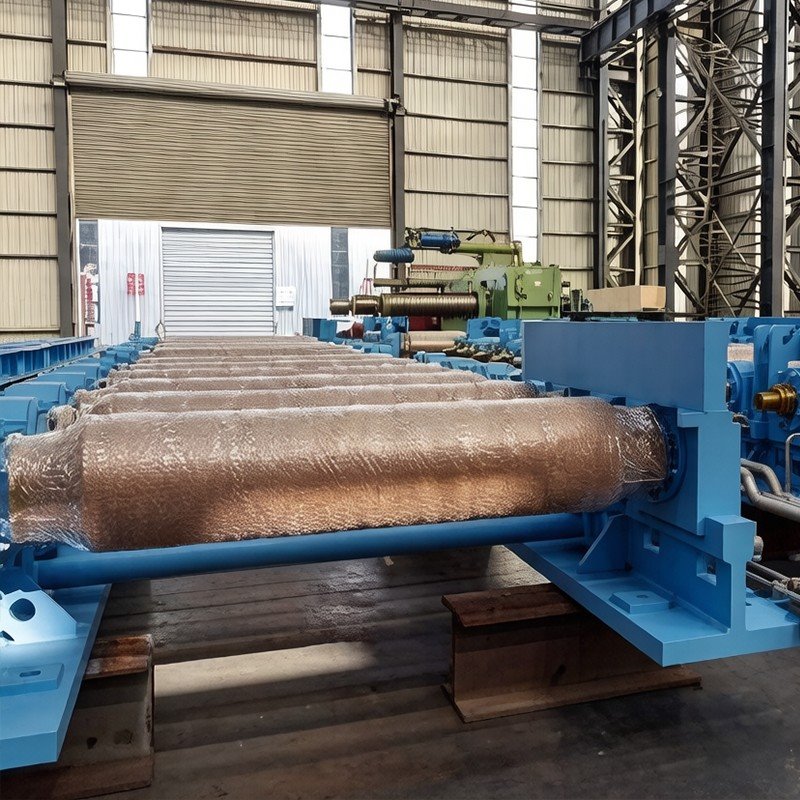
If you're interested in purchasing an industrial cooling bed or have any questions about the materials used in their construction, please don't hesitate to contact us. We'd be happy to discuss your requirements and provide you with a free quote.
References
- ASM Handbook, Volume 1: Properties and Selection: Irons, Steels, and High-Performance Alloys
- Metals Handbook Desk Edition, 3rd Edition
- Composite Materials Handbook, Volume 1: Polymer Matrix Composites