

An industrial rotary table is a crucial piece of equipment in many manufacturing and industrial processes. It provides precise rotational movement, which is essential for operations such as machining, assembly, and inspection. However, a common question that arises is whether an industrial rotary table can be used in a high - temperature environment. As an Industrial Rotary Table supplier, I will delve into this topic to provide a comprehensive answer.
Understanding High - Temperature Environments in Industry
In industrial settings, high - temperature environments are prevalent in several sectors. For instance, in the metalworking industry, processes like hot rolling, forging, and heat treatment involve temperatures that can far exceed normal room temperature. In a hot - rolling mill, the slabs or billets are heated to extremely high temperatures before they are passed through the rolling stands. The environment around the machinery is thus filled with intense heat, radiation, and sometimes even molten metal splashes.
Similarly, in foundries where metals are melted and cast, the temperature near the furnaces and pouring areas can be scorching. These high - temperature environments pose unique challenges to the machinery and equipment used within them.
Challenges of Using Industrial Rotary Tables in High - Temperature Environments
Material Degradation
The materials used in industrial rotary tables are carefully selected to provide the necessary strength, precision, and durability. However, high temperatures can cause these materials to degrade. For example, the metal components of the rotary table may undergo thermal expansion. This expansion is not uniform in all parts of the table, which can lead to misalignment and affect the precision of the rotational movement.
Plastic components, if any, may melt or become brittle at high temperatures. Lubricants used in the bearings and moving parts of the rotary table can also break down. This leads to increased friction, wear, and tear, and ultimately, a shorter lifespan of the equipment.
Electronic and Control Systems
Modern industrial rotary tables often come equipped with electronic sensors and control systems. These systems are designed to operate within a specific temperature range. High temperatures can cause electronic components to malfunction or fail. Sensors may give inaccurate readings, and control systems may lose their ability to regulate the rotational speed and position of the table precisely.
Sealing and Contamination
In high - temperature environments, the seals used in the rotary table can degrade. This allows hot gases, dust, and debris to enter the internal parts of the table. Contamination can cause abrasion, corrosion, and blockages, further affecting the performance and reliability of the rotary table.
Adaptations for High - Temperature Use
Despite the challenges, with proper design and modification, industrial rotary tables can be used in high - temperature environments.
High - Temperature Resistant Materials
We, as a supplier, offer rotary tables made from high - temperature resistant materials. For example, some of our tables use special alloys that can withstand elevated temperatures without significant deformation. These alloys have a low coefficient of thermal expansion, ensuring that the table maintains its precision even in hot conditions.
Cooling Systems
To counteract the effects of high temperatures, we integrate cooling systems into our industrial rotary tables. These can be either air - cooled or liquid - cooled systems. Air - cooled systems use fans to blow cool air over the critical components of the table, while liquid - cooled systems circulate a coolant through channels in the table structure to absorb and dissipate heat.
Special Sealing
We use high - temperature resistant seals in our rotary tables. These seals are designed to maintain their integrity and sealing properties even at high temperatures, preventing contamination and ensuring the smooth operation of the table.
Robust Electronic Systems
Our rotary tables are equipped with electronic systems that are designed to withstand high temperatures. We use components with a high temperature rating and incorporate heat - shielding mechanisms to protect the sensitive electronics.
Applications of Industrial Rotary Tables in High - Temperature Environments
Hot Rolling Mills
In hot rolling mills, Industrial Rotary Table can be used for various purposes. They can rotate the hot rolling stock to ensure uniform heating and rolling. The precise rotational movement provided by the rotary table helps in achieving the desired thickness and shape of the rolled products.
Foundries
In foundries, industrial rotary tables can be used for handling molten metal molds. They can rotate the molds to ensure proper filling and solidification of the metal. The high - temperature resistant design of our tables allows them to operate in the harsh environment of a foundry without any issues.
Heat Treatment Plants
In heat treatment plants, where metals are heated and cooled to change their properties, industrial rotary tables can be used to move the workpieces through different stages of the heat treatment process. The ability to withstand high temperatures is crucial in this application to ensure the efficiency and accuracy of the heat treatment process.
Comparison with Other Equipment in High - Temperature Environments
In addition to industrial rotary tables, there are other pieces of equipment used in high - temperature industrial environments. For example, Heavy Plate Tilter is used to tilt heavy plates during hot rolling or other processes. While the heavy plate tilter is designed for a specific tilting function, the industrial rotary table provides rotational movement, which is useful for different operations.
Industrial Cooling Bed is used to cool down the hot - rolled products. The cooling bed is mainly focused on the cooling process, whereas the rotary table can be used before, during, or after the cooling process for various handling and processing tasks.
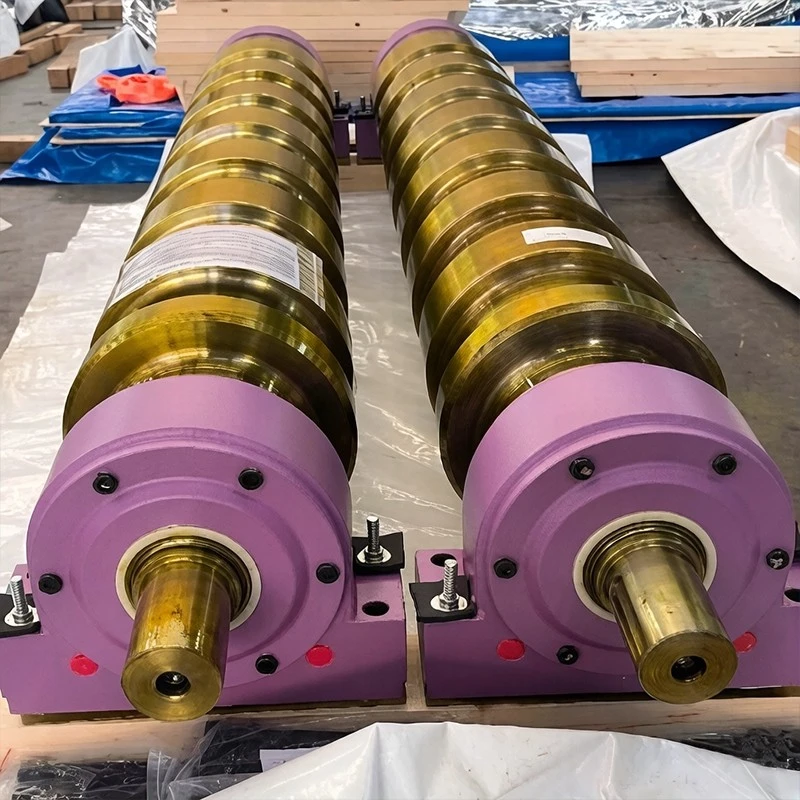

Roller Ball Conveyor Table is used to transport hot materials. The roller ball conveyor table provides linear movement, while the industrial rotary table provides rotational movement, and both have their unique applications in high - temperature industries.
Conclusion
In conclusion, while high - temperature environments present significant challenges to the use of industrial rotary tables, with proper design, materials, and adaptations, these tables can be effectively used in such conditions. Our company, as a supplier of industrial rotary tables, has the expertise and technology to provide high - quality tables that are suitable for high - temperature applications.
If you are in need of an industrial rotary table for a high - temperature environment or have any questions about the products we offer, we invite you to contact us for a detailed discussion. We are committed to providing you with the best solutions for your industrial needs.
References
- J. Smith, "Engineering Materials for High - Temperature Applications", Industrial Materials Journal, 2018.
- A. Johnson, "Industrial Equipment Design for Harsh Environments", Manufacturing Technology Review, 2020.
- B. Williams, "Rotary Table Technology in Modern Industry", Machinery and Equipment Magazine, 2019.