

Determining the optimal roller chain tension is super important in keeping your machinery running smoothly and efficiently. As a supplier of Roller Chain Tension, I've seen firsthand how the right tension can make or break a system. So, let's dive into the methods you can use to find that sweet - spot tension.
Visual Inspection
The simplest and most basic way to check chain tension is through visual inspection. Take a good look at the chain. If it sags a lot between sprockets, it's probably too loose. On the flip side, if there's no give at all and it looks super tight, you've likely tightened it too much.
You can use a straightedge or a ruler to get a better idea. Place the straightedge across the two sprockets over the chain. Measure the amount of sag at the mid - point between the sprockets. Industry standards usually suggest that for a horizontal chain run, the sag should be around 2% - 3% of the distance between the sprockets. For a vertical run, a bit less sag, around 1% - 2% is ideal.
This method is quick and easy, but it's not the most accurate. It can be a good initial check, especially if you're in a hurry or if you don't have the right tools on hand. However, for more precise applications, you'll need to use other methods.
Using a Tension Gauge
A tension gauge is a more accurate way to measure chain tension. These gauges come in different types, but the basic principle is the same. You press the gauge against the chain and it gives you a reading of the tension.
First, you need to know the recommended tension for your specific chain. This information can usually be found in the chain's manufacturer documentation. Then, place the tension gauge on the chain at the mid - span between the sprockets. Make sure the gauge is firmly attached and perpendicular to the chain.

The gauge will then display the current tension in either pounds, newtons, or another unit of force. Compare this reading with the recommended tension. If the reading is too low, you need to tighten the chain; if it's too high, you should loosen it.
Using a tension gauge takes a bit more time than visual inspection, but it gives you a much more precise measurement. It's especially useful in high - precision applications where even a small deviation in tension can cause problems.
Frequency - Based Methods
Frequency - based methods are a high - tech way to determine chain tension. These methods rely on the fact that a vibrating chain has a natural frequency that's related to its tension.
To use this method, you'll need a frequency analyzer. You start by exciting the chain to make it vibrate. This can be done by gently tapping the chain with a small hammer or using a vibration - inducing device. The frequency analyzer then measures the vibration frequency of the chain.
There are formulas that relate the chain's natural frequency to its tension. By inputting the measured frequency and other known parameters such as the chain's mass and length, you can calculate the tension.
This method is very accurate, but it requires specialized equipment and some technical knowledge. It's often used in research and in applications where very precise tension control is required, like in high - speed machinery or aerospace applications.
Static Deflection Method
The static deflection method is another reliable way to determine the optimal chain tension. In this method, you apply a known force to the chain at the mid - point between the sprockets and measure the resulting deflection.
First, mark a reference point on the chain. Then, use a spring scale or another force - measuring device to apply a force perpendicular to the chain at the mid - span. Measure the distance the chain deflects from its original position.
There are empirical formulas that can be used to calculate the chain tension based on the applied force and the deflection. For example, for a simple chain system, the tension (T) can be approximated as (T=\frac{F\times L}{4\delta}), where (F) is the applied force, (L) is the distance between the sprockets, and (\delta) is the deflection.
This method is relatively simple and doesn't require high - tech equipment. However, it does assume that the chain behaves like a simple elastic string, which may not be entirely accurate in all cases.
Role of Well - Tensioned Roller Chains in Different Equipment
Here at our place, we understand that roller chains are used in a wide range of equipment, and proper tension is crucial for each one. For instance, in Automatic Tracking Roller systems, a well - tensioned chain ensures that the rollers move smoothly and accurately, preventing misalignment and improving the overall performance of the equipment.
In Furnace Roller applications, the high - temperature environment can cause the chain to expand and contract. Maintaining the right tension helps compensate for these changes and keeps the furnace rollers operating efficiently.
The Heavy Duty Decoiler also relies on a properly tensioned roller chain. A loose chain can lead to slippage, which reduces the efficiency of the decoiling process. On the other hand, an overly tight chain can cause excessive wear on the sprockets and the chain itself.
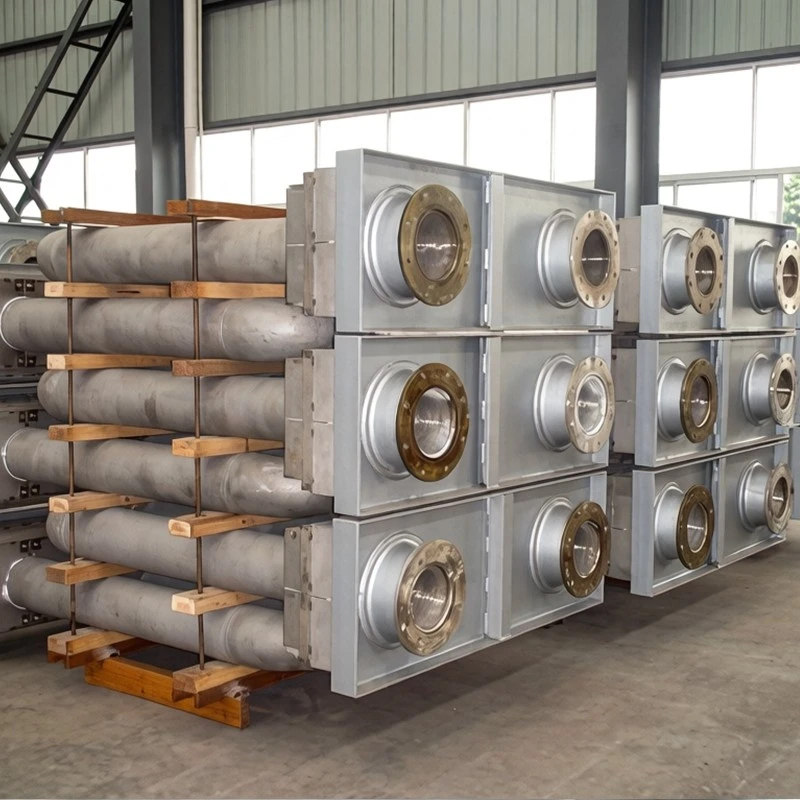
And let's not forget about Radiation Furnace Tube systems. In these systems, the chain needs to operate in a harsh environment, and the right tension is essential to prevent the chain from breaking under stress.
Why Choose Our Roller Chain Tension Products
As a supplier, we take pride in offering high - quality roller chain tension products. Our products are designed to meet the diverse needs of different industries. We've got a wide range of options, from simple tensioners to more advanced, automated systems.
Our team of experts is always available to help you choose the right product for your specific application. We understand that every situation is unique, and we're committed to providing you with customized solutions. Whether you're using a chain in a small workshop or a large industrial facility, we've got you covered.
Let's Get in Touch
If you're looking for the best roller chain tension solutions, don't hesitate to reach out. Whether you need more information about our products, help in determining the optimal tension for your chain, or you're ready to make a purchase, we're here for you. Let's work together to keep your machinery running at its best.
References
- Manufacturer's documentation of roller chains.
- Industry standards related to chain tension measurements.
- Technical literature on mechanical vibration and chain mechanics.