

Hey there! As a supplier of Helical Finned Tubes, I often get asked about how their surface area stacks up against plain tubes. Well, let's dive right into it and explore this topic in detail.
First off, what are Helical Finned Tubes and plain tubes? Plain tubes are just your basic cylindrical pipes with a smooth outer surface. They're simple, straightforward, and have been used in various industries for ages. On the other hand, Helical Finned Tubes have a series of fins wrapped around the outer surface in a helical pattern. These fins can be made from different materials like steel, aluminum, or copper, depending on the application.
So, why does surface area matter? In heat transfer applications, a larger surface area means more contact between the tube and the fluid (either gas or liquid) flowing around it. This increased contact allows for more efficient heat exchange. When it comes to energy efficiency and performance, having a greater surface area can make a huge difference.
Let's start by looking at the surface area formula for a plain tube. The surface area of a plain tube can be calculated using the formula (A = \pi dL), where (d) is the outer diameter of the tube and (L) is the length of the tube. For example, if you have a plain tube with an outer diameter of 2 inches and a length of 10 feet (or 120 inches), the surface area would be (A=\pi\times2\times120 = 240\pi\approx 754) square inches.
Now, let's consider Helical Finned Tubes. The surface area of a Helical Finned Tube is a bit more complex to calculate because it includes the surface area of the base tube as well as the surface area of the fins. The formula for the surface area of a Helical Finned Tube is (A = A_{base}+A_{fins}). The surface area of the base tube is calculated in the same way as a plain tube, (A_{base}=\pi dL). The surface area of the fins depends on the fin height, fin pitch, and the number of fins.
Let's assume we have a Helical Finned Tube with the same outer diameter of 2 inches and a length of 10 feet. If the fin height is 0.5 inches, the fin pitch is 0.25 inches, and the number of fins is 480 (since the fin pitch is 0.25 inches and the length is 120 inches), we can calculate the surface area of the fins. The surface area of each fin can be approximated as (2\times h\times L), where (h) is the fin height and (L) is the length of the tube. So, the surface area of one fin is (2\times0.5\times120 = 120) square inches. The total surface area of all the fins is (480\times120 = 57600) square inches. The surface area of the base tube is (\pi\times2\times120 = 240\pi\approx 754) square inches. So, the total surface area of the Helical Finned Tube is approximately (57600 + 754=58354) square inches.
As you can see, the surface area of the Helical Finned Tube is significantly larger than that of the plain tube. In this example, the Helical Finned Tube has a surface area that is about 77 times larger than the plain tube! This huge increase in surface area means that Helical Finned Tubes can transfer heat much more efficiently than plain tubes.
There are several factors that can affect the surface area of Helical Finned Tubes. The fin height, fin pitch, and fin thickness all play a role. A taller fin will increase the surface area, but it may also increase the pressure drop across the tube. A smaller fin pitch will result in more fins and a larger surface area, but it can also make the tube more difficult to clean. The fin thickness can affect the strength and durability of the fins, as well as the heat transfer performance.
In industries such as petrochemical, power generation, and HVAC, Helical Finned Tubes are widely used because of their superior heat transfer capabilities. For example, in a petrochemical plant, Helical Finned Tubes can be used in heat exchangers to transfer heat between different process streams. The increased surface area allows for more efficient heat transfer, which can lead to energy savings and improved process performance.
Now, let's talk about some of the other products related to Helical Finned Tubes in the petrochemical equipment industry. If you're looking for Furnace Tube Hanger, Intermediate Tube Sheet, Reformer Catalyst Tubes, or Cold Wall Manifold, you can find them at our website. These products are all important components in petrochemical furnaces and heat exchangers.
If you're in the market for Helical Finned Tubes or any of the related products, don't hesitate to reach out for a procurement discussion. We're here to help you find the right solutions for your specific needs. Whether you need a small quantity for a research project or a large order for an industrial application, we can provide high-quality products and excellent customer service.
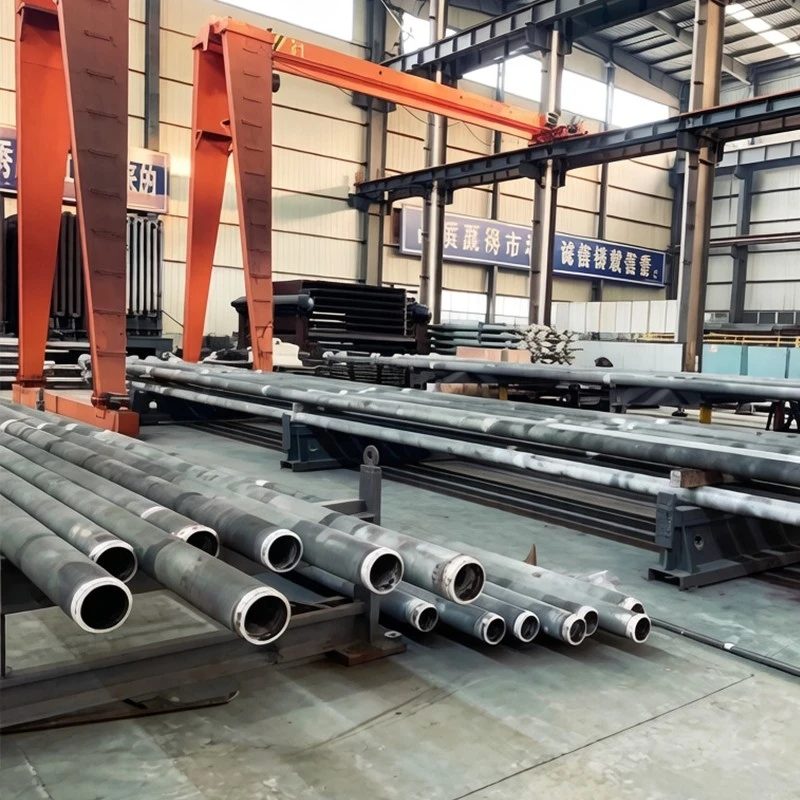
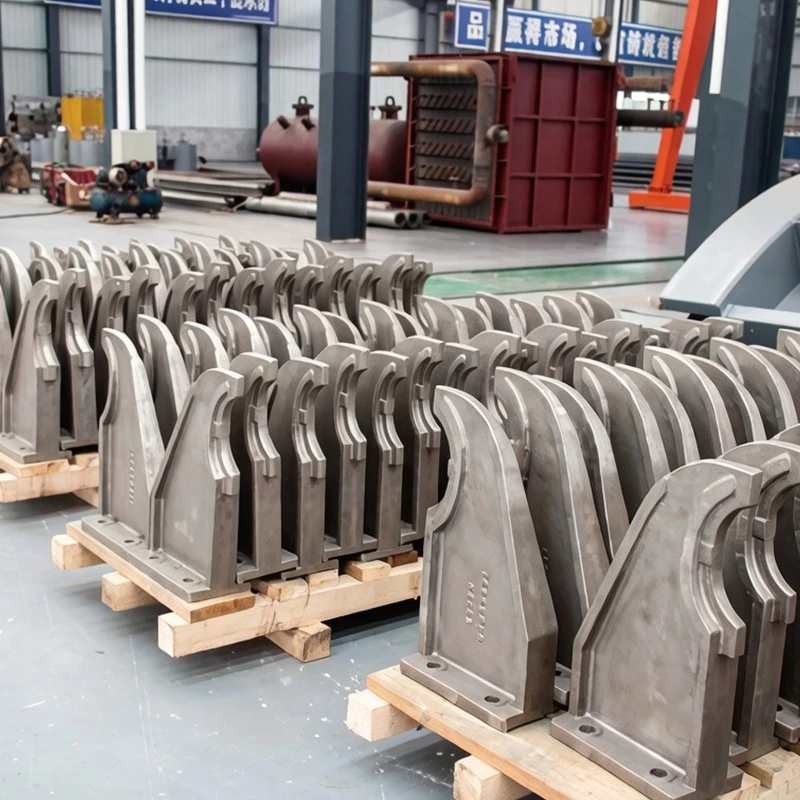
In conclusion, the surface area of Helical Finned Tubes is much larger than that of plain tubes, which makes them a great choice for heat transfer applications. The increased surface area allows for more efficient heat exchange, leading to energy savings and improved performance. If you're interested in learning more about Helical Finned Tubes or any of our other products, feel free to contact us.
References:
- Incropera, F. P., & DeWitt, D. P. (2002). Fundamentals of Heat and Mass Transfer. John Wiley & Sons.
- Bergman, T. L., Lavine, A. S., Incropera, F. P., & DeWitt, D. P. (2011). Introduction to Heat Transfer. John Wiley & Sons.