

As a well - established supplier of Intermediate Tube Sheets, I understand the critical role flatness plays in the functionality and performance of these components. In petrochemical equipment, the Intermediate Tube Sheet serves as a vital part, ensuring the proper alignment and support of tubes. Any deviation from flatness can lead to a series of problems, such as uneven stress distribution, leakage, and reduced efficiency of the overall system. In this blog, I will share some effective strategies to ensure the flatness of Intermediate Tube Sheets.
Material Selection
The first step in ensuring flatness begins with the right material selection. High - quality materials with consistent properties are essential. For Intermediate Tube Sheets, materials like carbon steel, stainless steel, and alloy steel are commonly used. When we choose materials, we need to consider their chemical composition, mechanical properties, and the ability to resist deformation.
For example, stainless steel offers excellent corrosion resistance, which is crucial in petrochemical environments where the tube sheets are often exposed to corrosive substances. Moreover, the material should have a low coefficient of thermal expansion. This helps to minimize the dimensional changes that occur during temperature fluctuations, which is a common cause of flatness issues. When sourcing materials, it is important to work with reputable suppliers who can provide detailed material certificates, ensuring the quality and consistency of the materials.
Precise Manufacturing Processes
Precision machining is the key to achieving the desired flatness of Intermediate Tube Sheets. Computer - Numerical - Control (CNC) machining is a widely used method. CNC machines can operate with a high degree of accuracy, allowing for tight tolerances to be maintained during the machining process.
Milling is one of the primary machining operations for tube sheets. When milling Intermediate Tube Sheets, we use multiple passes with different cutting depths to gradually remove material and reduce the stress on the sheet. This helps to prevent warping and ensures a smooth surface. Additionally, grinding can be used as a finishing process to further improve the flatness. Grinding wheels with appropriate grit sizes are selected based on the required surface finish and flatness tolerance.
During the manufacturing process, in - process inspections are also very important. We use advanced measuring instruments such as laser scanners and coordinate measuring machines (CMMs) to continuously monitor the flatness of the tube sheets. These instruments can provide accurate data on any deviations, allowing us to make immediate adjustments to the machining parameters.
Heat Treatment
Heat treatment is another crucial step in ensuring flatness. It can relieve internal stresses that are generated during the manufacturing process, such as machining and welding. Annealing is a common heat - treatment method for Intermediate Tube Sheets. By heating the tube sheets to a specific temperature and then slowly cooling them, we can reduce the internal stresses and improve the material's ductility and toughness.
Normalizing is also used in some cases. Normalizing involves heating the tube sheet to a higher temperature than annealing and then cooling it in air. This process can refine the grain structure of the material, enhancing its mechanical properties and reducing the risk of deformation. However, it is important to carefully control the heat - treatment parameters, including temperature, heating rate, and cooling rate. Improper heat treatment can actually cause more severe flatness problems.
Handling and Storage
Proper handling and storage are often overlooked but are essential for maintaining the flatness of Intermediate Tube Sheets. During handling, we should use appropriate lifting equipment to avoid applying uneven forces on the tube sheets. For example, using slings with wide contact areas can help distribute the weight evenly and prevent bending.
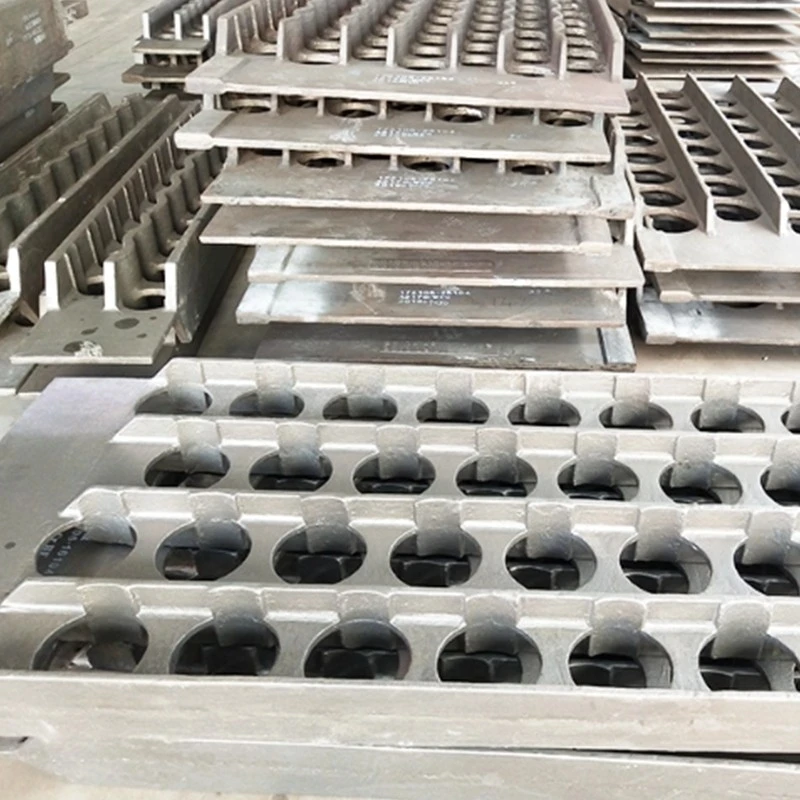
When storing Intermediate Tube Sheets, they should be placed on a flat and stable surface. Stacking the tube sheets is not recommended unless proper spacers are used to ensure that the sheets do not deform under the weight of the upper layers. Additionally, the storage environment should be controlled to prevent rust and corrosion, which can also affect the flatness of the tube sheets over time.
Assembly and Installation
During the assembly and installation of Intermediate Tube Sheets in petrochemical equipment, it is crucial to follow the correct procedures. All mounting surfaces should be inspected for flatness and cleaned to remove any debris or contaminants. Alignment tools should be used to ensure that the tube sheet is correctly positioned.
For example, when installing the tube sheet in a furnace, the alignment with other components such as Furnace Tube Hanger and Pyrolysis Tube is critical. Any misalignment can put additional stress on the tube sheet, leading to flatness issues. Moreover, during the installation process, the tightening torque of the bolts should be carefully controlled to ensure uniform clamping force across the tube sheet.
Quality Control and Testing
Comprehensive quality control and testing are necessary to guarantee the flatness of Intermediate Tube Sheets. In addition to in - process inspections during manufacturing, final inspections are also carried out before the tube sheets are shipped to the customers.
We use a combination of visual inspection, dimensional measurement, and non - destructive testing (NDT) methods. Visual inspection can detect any obvious surface defects, while dimensional measurement using tools like micrometers and calipers can verify the flatness within the specified tolerances. NDT methods such as ultrasonic testing and magnetic particle testing can be used to detect internal defects that may affect the flatness and integrity of the tube sheets.
Conclusion
Ensuring the flatness of Intermediate Tube Sheets is a multi - faceted process that involves careful material selection, precise manufacturing processes, appropriate heat treatment, proper handling and storage, correct assembly and installation, and comprehensive quality control. By following these strategies, we can produce high - quality Intermediate Tube Sheets that meet the strict requirements of the petrochemical industry.
If you are in the market for Intermediate Tube Sheet or related products such as Cold Wall Manifold and Helical Finned Tube, we are here to provide you with the best solutions. Our team of experts has extensive experience in the production and application of these components, and we are committed to delivering products of the highest quality. Contact us for further discussions and procurement negotiations.
References
- ASME Boiler and Pressure Vessel Code.
- Petrochemical Engineering Handbook.
- Standards for Tube Sheet Manufacturing in the Petrochemical Industry.